
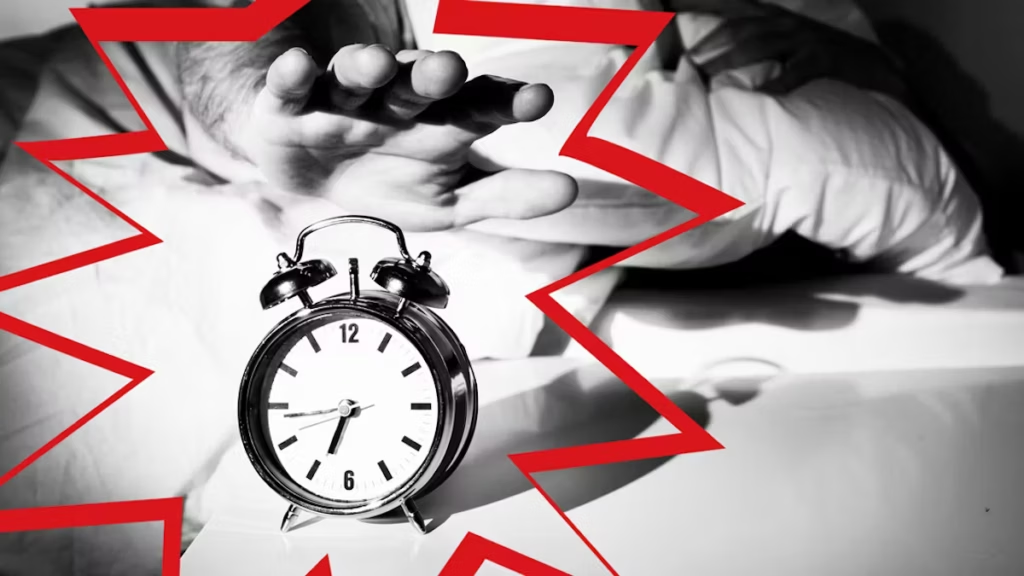
We’ve all been there: the alarm pierces the silence of your bedroom, and your first instinct isn’t to greet the day, but to negotiate with it. You hit the snooze button, convinced that another ten minutes of shut-eye will be the “bridge” that finally makes you feel rested.
But science tells a different story. Those extra minutes aren’t just unhelpful—they might be the reason you feel like a zombie until your second cup of coffee. Here is why your “financial snooze” is a bad investment for your energy.
1. The Trap of Sleep Inertia
When your alarm goes off, your body is usually in the process of “lightening up” its sleep depth to prepare for wakefulness. By hitting snooze and falling back asleep, you are essentially tricking your brain into starting a brand-new sleep cycle.
The problem? A full sleep cycle takes about 90 minutes. When your second alarm goes off 10 minutes later, you are likely being ripped out of a deeper stage of sleep than you were in originally. This triggers Sleep Inertia—that heavy, “hit by a truck” feeling that can take up to four hours to fully dissipate. By trying to get more rest, you’ve actually guaranteed a morning of mental fog.

2. The Myth of “Bonus” Rest (Junk Sleep)
Not all sleep is created equal. The rest you get between snooze alarms is what experts call Fragmented Sleep. Because you are constantly anticipating the next alarm, your body stays in a state of “alert rest,” never reaching the restorative REM or deep sleep stages required for cellular repair and memory consolidation.

Essentially, snoozing is “junk sleep”—it fills the time but offers zero nutritional value for your brain. You are much better off setting your alarm for the latest possible moment and enjoying one solid, uninterrupted block of high-quality rest.
3. Training Your Brain to Ignore You
Consistency is the language of the human nervous system. When you set an alarm for 7:00 AM but don’t actually get up until 7:30 AM, you are training your brain to treat your “wake-up call” as a suggestion rather than a command.
Over time, this weakens your Circadian Rhythm. Your body becomes confused about when it should actually start releasing the hormones (like cortisol) that help you feel alert. By committing to the “Single Alarm Rule,” you reinforce a Pavlovian response: the alarm sounds, and the body begins to wake up immediately.
4. The Psychological “Start-Stop” Cost
Starting your day by “delaying” your first task (waking up) sets a subconscious tone of procrastination for the next 16 hours. When you conquer the alarm on the first ring, you start your day with a “win.” It’s a small act of discipline that creates a ripple effect of productivity, making you more likely to tackle your to-do list with a proactive rather than a reactive mindset.
How to Break the Cycle: A 3-Step Strategy
- The “Across the Room” Rule: Place your phone or alarm clock in a spot where you physically have to stand up and walk to turn it off. Once you’re on your feet, the battle is 90% won.
- The “Light First” Method: Open your curtains or turn on a smart light immediately. Light suppresses melatonin (the sleep hormone) and tells your internal clock that the “Night Shift” is officially over.
- The 90-Minute Math: If you find yourself constantly needing to snooze, try adjusting your bedtime so your total sleep time is a multiple of 90 minutes (e.g., 7.5 hours or 9 hours). This increases the odds of waking up at the end of a cycle when you’re already naturally light.
Top Articles